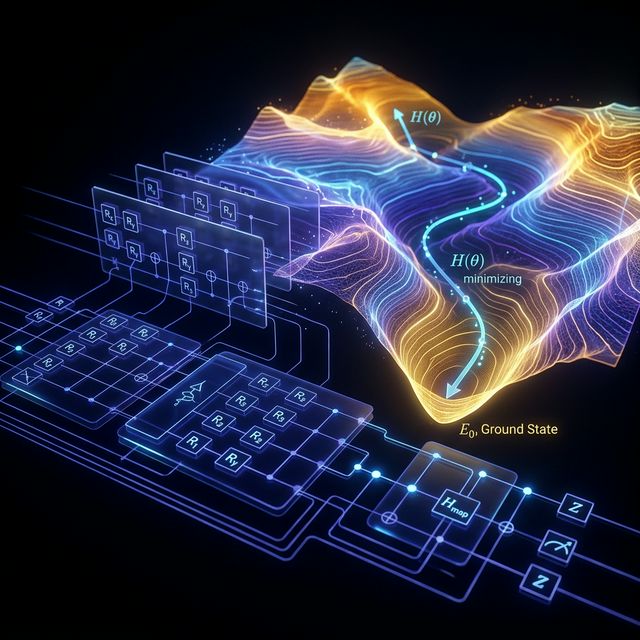
Quantum Neural Networks: Patterns in High-Dimensional Spaces
Exploring the emergent properties of entanglement-optimized neural architectures and their performance in complex probabilistic modelling.

Introduction
As we venture deeper into the NISQ (Noisy Intermediate-Scale Quantum) era, the intersection of quantum mechanics and machine learning has become a focal point of intense research.
Visualizing the Quantum State
The Bloch Sphere provides a geometric representation of the pure state space of a two-level quantum mechanical system (qubit).
Position Controls
State Vector
The Convergence of States
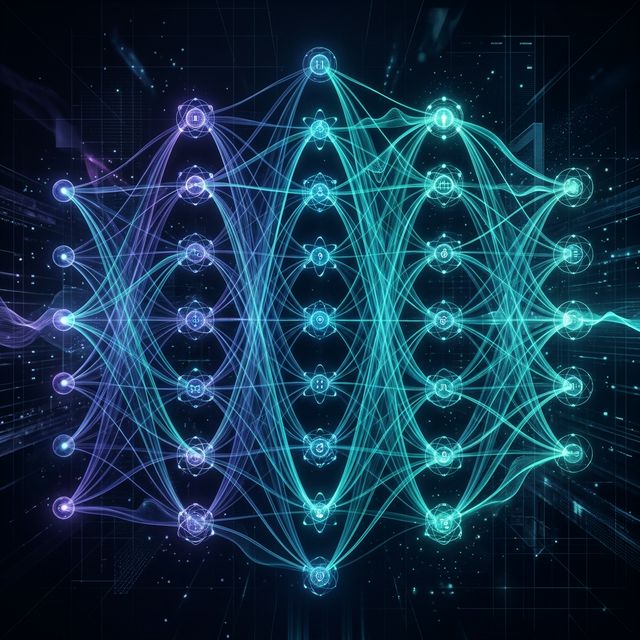
Quantum neural networks (QNNs) leverage the principle of superposition and entanglement to explore Hilbert spaces that are classically intractable.
Hilbert Space Mapping
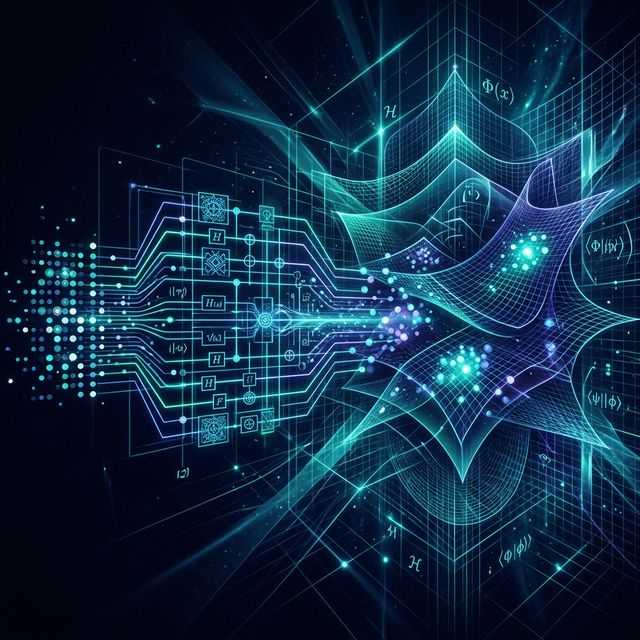
Consider a state representing a quantum system. The expressive power of a QNN is proportional to its ability to navigate the complex manifold of these states.
Algorithmic Foundations
Implementing these structures requires a shift in how we think about backpropagation. We can visualize the sequence of operations through circuit diagrams.
Quantum Circuit
Interactive architectural visualization
Conclusion
The future of intelligence is quantum. As hardware scales, so too will our ability to model reality itself.
Rashan Dissanayaka
Rashan is a Data Science Professional and Quantum AI Researcher, and the Founder & CEO of Intellit — an AI automation agency building intelligent systems across fintech, banking, and enterprise sectors.
The Quantum Intelligence Digest
Join researchers and engineers who read Quaniq.